How to Find a Qualified Commercial General Contractor (Without Costly Mistakes)
How to Find a Qualified Commercial General Contractor (Without Costly Mistakes)
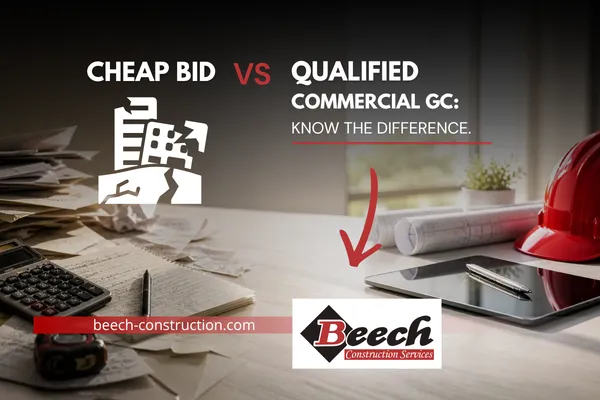
So a property manager calls me the other day, completely stressed out. They've got a tenant build-out that was supposed to be done three weeks ago. The walls are open, the materials are sitting in a pile, and the contractor they hired has stopped answering the phone.
I asked to see the original estimate. It was a single number scrawled on a piece of notebook paper. It was cheap, sure. But now it's going to cost them double to fix the mess.
If you manage commercial properties or facilities, you already know how hard it is to find someone who just does what they say they're going to do. You don't have time to babysit a job site. You need a commercial general contractor who brings structure, clear communication, and predictable results.
Here's how you actually find one.
What Is a Qualified Commercial General Contractor?
A qualified commercial general contractor doesn't just swing hammers. They manage chaos. They are the single point of accountability for your entire project.
They handle the subcontractors. They coordinate the inspections. They keep the budget from spiraling out of control. Most importantly, they understand commercial codes and safety requirements, which are entirely different from residential work.
When you hire a real commercial GC, you aren't just paying for construction. You're paying for peace of mind. You're paying to not have your phone ring at 6 AM with a crisis.
How to Find a Commercial General Contractor (Step-by-Step)
Define Your Project Scope Before you even pick up the phone, write down exactly what you need: A vague scope is the number one reason commercial projects go over budget. According to a McKinsey study, large projects typically take 20% longer to finish than scheduled and are up to 80% over budget [1]. If you don't know what you want, the GC has to guess. And guessing always leads to change orders later.
Get Commercial Referrals Don't ask your neighbor who did their kitchen: Ask other property managers, commercial developers, or commercial real estate brokers. You want referrals from people who manage facilities for a living.
Verify Licensing Never take someone's word for it: In Tennessee, for example, any project over $25,000 requires a licensed commercial contractor. You can look this up online in about thirty seconds. If they aren't licensed for commercial work, walk away immediately.
Confirm Insurance Coverage: If a worker gets hurt on your commercial property and the GC doesn't have workers' compensation, you could be the one writing the check. Always ask for a Certificate of Insurance (COI). Then actually call the agency to make sure the policy is active.
Evaluate Local Commercial Experience: Commercial codes are complicated. You need someone who knows the local inspectors and understands the specific permitting requirements for tenant build-outs or medical facilities. A guy who builds houses will get eaten alive by commercial compliance. If you're looking at a specialized build, like a medical facility, check out our guide on Designing Patient-Centric Medical Facilities.
Interview Multiple Commercial GCs: Sit down with them and ask how they actually run a job. What project management software do they use? How do they handle subcontractor scheduling? If their answer is "I just keep it all in my head," that's a problem.
Request Detailed Commercial Estimate: A real estimate is broken down trade by trade. It lists allowances, exclusions, and a clear timeline. If a GC hands you a lump-sum bid with no details, throw it in the trash.
Check Commercial References and Local Projects: Call their past clients. Ask the hard questions. Did they hit the schedule? Did they communicate clearly when things went wrong? Would you hire them again?
Review the Contract Carefully: A professional commercial contract protects everyone. It should clearly define the draw schedule, the timeline, and exactly how change orders are handled.
Red Flags When Hiring a Commercial General Contractor
Run, don't walk, if a GC:
Can't show you similar commercial projects they've completed
Gives you a bid that is drastically lower than everyone else
Tries to start work without a signed, detailed contract
Asks for a massive upfront deposit before any materials are ordered
Takes three days to return your initial phone call
Commercial Construction Cost Tips
Always get at least three bids.
Never pay the full amount upfront. Use a progress-based draw schedule tied to specific milestones.
Be highly suspicious of the lowest bid.
The lowest bid is almost never the best option. It usually means they missed something in the scope, they plan to use cheap materials, or they are going to hit you with massive change orders once the project starts. In fact, 72% of construction firms say projects have taken longer than anticipated [1].
If you're planning a project soon, take a look at our Q2 Kick-Off guide for commercial buildings to see how early planning can save you money.
Quick Checklist: Hiring a Commercial General Contractor
Verify their commercial license
Confirm active insurance policies
Review their local commercial portfolio
Get three detailed, written bids
Call their commercial references
Sign a comprehensive contract
Bottom Line
Choosing the right partner for your commercial project is about protecting your investment and your time. The right GC makes your life easier. The wrong one makes it a nightmare.
We've been doing this for over 30 years in the Nashville area. At Beech Construction Services, we don't compete on being the cheapest. We compete on being the most reliable. We do what we say we're going to do, and we do it right the first time.
If you're tired of the headaches and just want predictable results on your next commercial project, let's talk. Learn more about our commercial construction services here.